
Edicola 518
We’re a fan of small-scale interventions that have larger impacts. Edicola 518, a small retrofitted kiosk in Perguia, Italy, is a great example of creative thinking for existing infrastructure. What was once a former, locally-loved newsstand, is now a microhub for rest, reading, and informal gathering. And best of all, it’s free.
After a year of gathering public input - through whiteboards, a self-run radio show, workshops, and open meetings, the design team let that process determine the renovation’s final form — a free public space rather than another commercial venture. Giuseppe Arezzi redesigned the kiosk with this community input in mind.
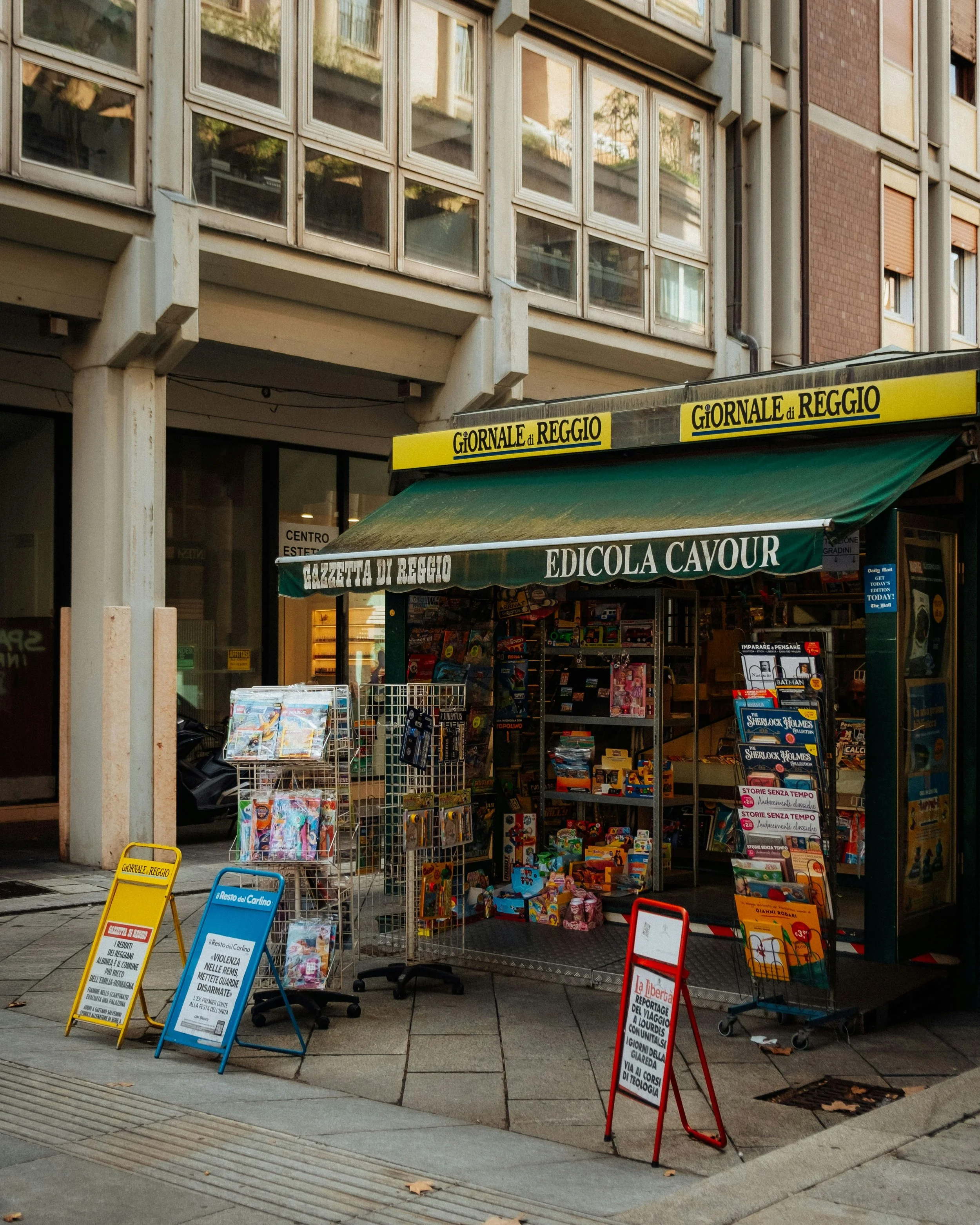
Photo by Grigorii Shcheglov on Unsplash
The redesign of the kiosk’s original steel-and-glass shell inverts the standard commercial relationship, opening it outward.
The redesign of the kiosk’s original steel-and-glass shell inverts the standard commercial/retail relationship, opening it outward; folding glass doors erase the line between inside and street, a deep red-orange wood interior makes it glow at night, and fold-out stools extend the space onto the staircase itself. It is an example of a truly public design that activates public space, inspires connection, and cultivates relationships. While other cities may have copied the ‘revived newsstand’ model, turning old kiosks into branded retail or pop-up concepts, Edicola 518 is unique in that it highlights that real value lies in creating uncommercialized public space, not just adaptive reuse for its own sake.
As we, at Praxis Placemaking Studio, dive into our next public space project, we’re keeping these key takeaways in mind:
Community input before design.
Reuse doesn't require a new use — sometimes it means removing one.
Design as connective tissue, not spectacle.
Small-scale intervention, larger implications.