
Sneckdown
As snow begins to melt here in the tri-state area, we’ve been intrigued by how sneckdowns can influence safer, better, and more efficient street systems.
Temporary curb extensions created by snow pile accumulation, known as sneckdown (Snowy Neckdown), create curb extensions that give natural hints into how intersections can be more safe and slower. This reel from BBC is a great peek into what snow can teach us about street design.
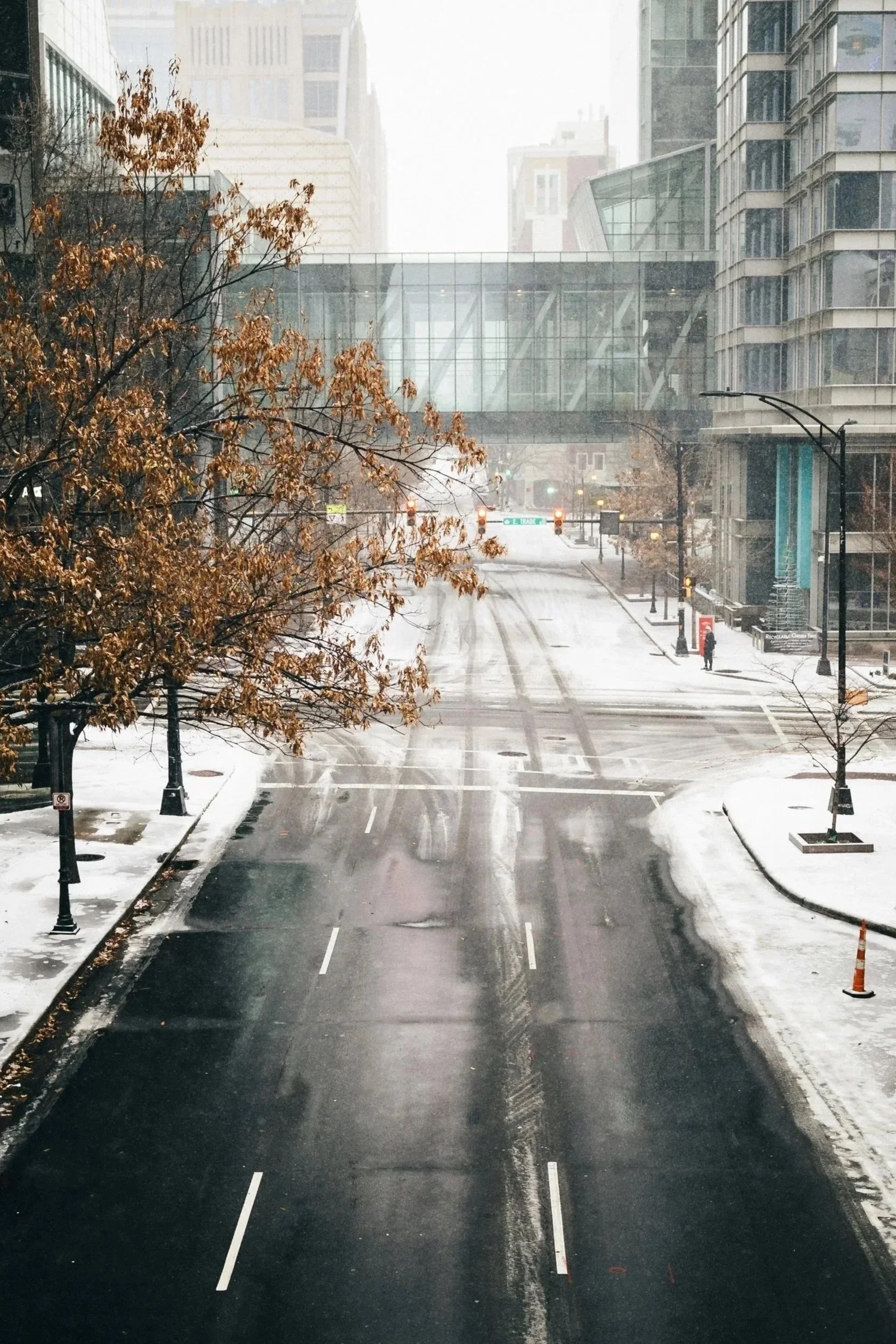
Each winter, cities receive an unintentional but remarkably insightful design study in the form of sneckdowns. Over at Slate, Jon Geeting put together an insightful article documenting the visual cues of these snowy interventions throughout East Passyunk Ave in Philadelphia. As snow piles claim excess asphalt, they quietly redraw the public right-of-way, narrowing crossings and softening turns. Pedestrians instinctively follow the most direct paths around them, while drivers adapt their routes in response. These patterns become a living map of desire lines and safety cues, revealing where streets may be wider or faster than they need to be. In this way, mother nature offers a seasonal critique of urban design, highlighting opportunities to make intersections slower, safer, and more intuitive.
The lesson of the sneckdown is not that every winter condition should be made permanent, but that these moments can inform experimentation. Street paint, temporary bollards, planters, and programmed activations can translate these snowy insights into low-risk pilots that test curb extensions, traffic calming, and street redistribution. Rather than relying solely on abstract models, cities can observe how people already move when space is constrained—and respond accordingly. Sneckdowns remind us that adaptation does not always begin with grand plans; sometimes it starts by paying attention to the subtle signals already shaping how our streets want to work.